Artist Statement
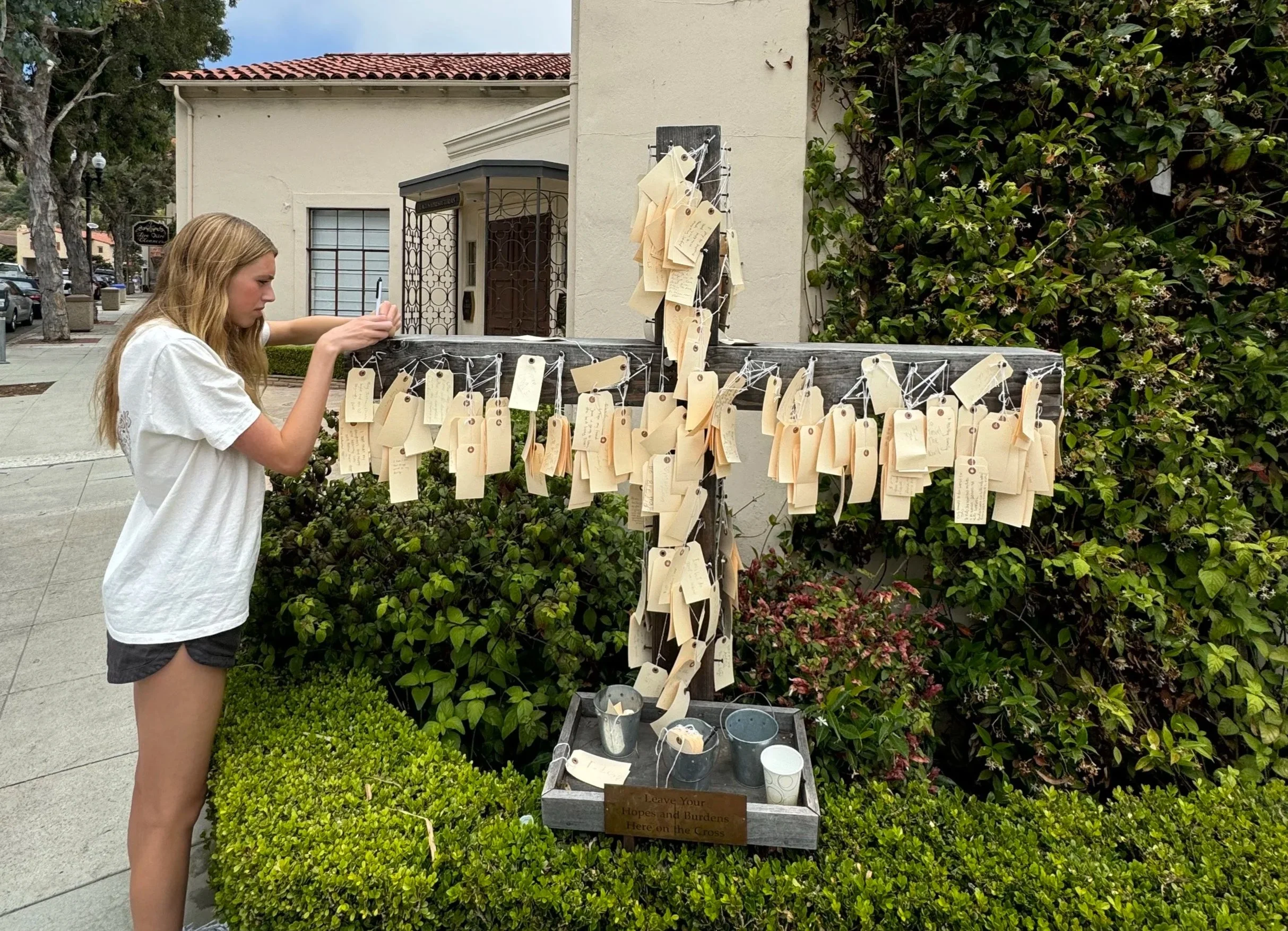
KEPT preserves handwritten prayers from public spaces—places where people write knowing their words may be seen. With explicit consent, each prayer is preserved exactly as it was written, in the writer's own hand.
Handwriting is evidence: a trace of a specific person at a specific moment, leaving language behind as proof of need. Each mark is unrepeatable—shaky or steady, hurried or careful, crammed into a corner or trailing off the edge. A plea for healing. A confession. A thank you. Praise. Whatever was written, however it was written, nothing is changed. Misspellings stay. Awkward spacing stays.
The original placement on the paper tag is replicated precisely on raw linen at monumental scale. The painting is a faithful record, not an interpretation. The original tag is retained alongside the work.
This is preservation, but it is not the end.
When someone stands before the work and reads the prayer, it reactivates. The viewer is invited into a role—witness, carrier, proxy—holding a stranger's petition for a moment as if it were their own. One person's grief or gratitude or longing passes, briefly, into another person's care.
The work functions as reliquary, record, and assignment. It refuses disappearance. It insists that what was offered in public can be carried forward—by anyone willing to hold it.
The work is not only object. It is exchange.
Biography
Scott Seton Hancock (b. 1974, Southern California) is a conceptual artist whose ongoing work preserves handwritten prayers from public spaces. Working with explicit consent, Hancock retains original prayer tags and enlarges each petition onto raw linen at monumental scale without alteration. The works function as reliquaries — documents of private address made available for others to carry.
Before returning to studio practice full-time, Hancock spent two decades building belief-driven cultural platforms, including the nationally distributed magazine Risen, the global social impact initiative Glue Network, and BLVR®, an award-winning brand consultancy. That work in narrative, conviction, and public meaning informs his current practice.
Exhibitions include "Blackout: 4th Annual National Art Exhibition," Ashton Gallery, San Diego (2024) and the solo exhibition "Religion," Keller Art Gallery, San Diego (2006). His work is held in private collections.
Hancock lives and works in Southern California.
Exhibitions
-
2006 Religion, Keller Art Gallery, San Diego, CA
-
2024 Blackout - 4th Annual National Art Exhibition, Ashton Gallery, San Diego, CA